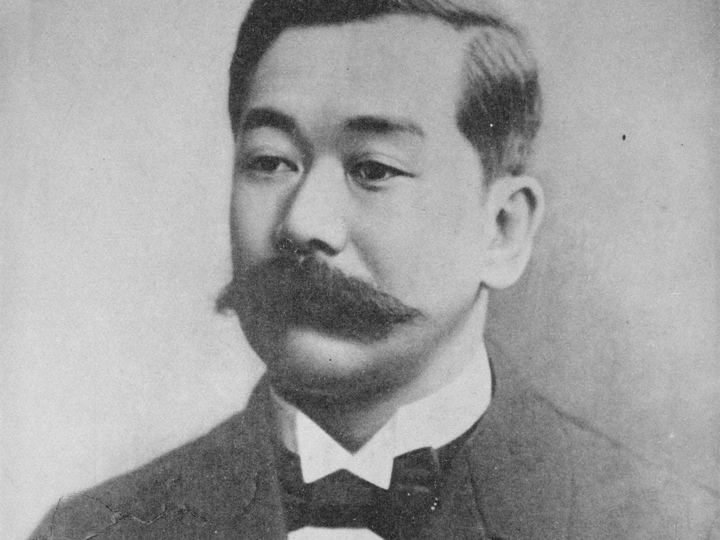
Gichin Funakoshi
The father of modern karate. Gichin Funakoshi brought Okinawan karate to mainland Japan in 1922 and inspired Shotokan. His life, his famous precepts and his lasting legacy.
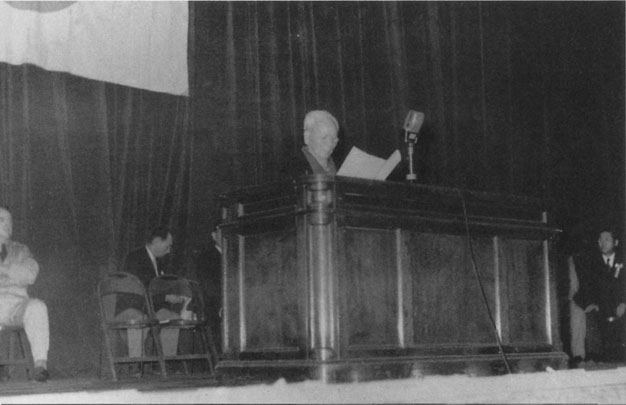
Funakoshi in 1953: 船越義珍(Funakoshi Gichin), Public domain
A schoolteacher from Shuri
Gichin Funakoshi was born in 1868 in Shuri, Okinawa. He was a sickly child, and he began training in karate partly to grow stronger. His teachers included two of the most respected Okinawan masters of the time, Anko Itosu and Anko Asato.
Funakoshi worked for years as a schoolteacher. He also loved poetry and wrote under the pen name Shoto, meaning waving pines, inspired by the wind in the pine trees near his home.
Bringing karate to Tokyo
In 1922 Funakoshi travelled to mainland Japan to demonstrate karate. He performed at a national physical education exhibition in Tokyo, and judo founder Jigoro Kano invited him to demonstrate at the Kodokan. The response was so strong that he stayed in Tokyo for the rest of his life.
To make karate easier to teach in Japanese schools and universities, he borrowed ideas from judo, including the white training uniform and, in 1924, the dan ranking system with black belts.
Shotokan, precepts and legacy
His students named their training hall the Shotokan, the hall of Shoto, and the name became one of the most popular karate styles in the world. In 1949 his students founded the Japan Karate Association with Funakoshi as its honorary head.
Funakoshi wrote twenty guiding principles for karate students. The best known says that there is no first attack in karate, a reminder that the art is about self-control and avoiding conflict. Other principles stress courtesy, humility and steady effort in everyday life.
Funakoshi wrote several books, including Karate-do Kyohan, often called The Master Text, and an autobiography published in English as Karate-Do: My Way of Life. He continued teaching into old age and died in 1957.
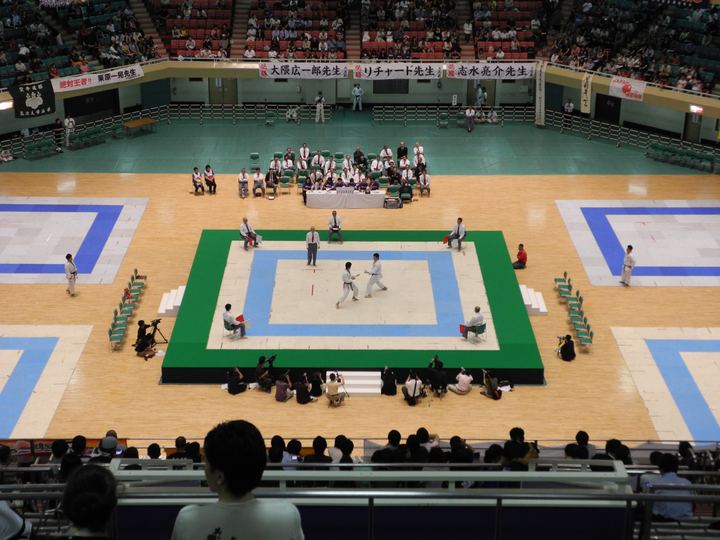
Today the JKA world championships are held as the Funakoshi Gichin Cup, and countless dojos display his portrait. Many people call him the father of modern karate.
Lessons from his principles
Funakoshi's guiding principles are still read aloud in many dojos. They ask students to begin and end with respect, to train the mind as well as the body and to apply karate's patience and effort to everyday life, at school, at work and at home.
He also believed karate should be practised for a lifetime. That is why many of his students kept training into their eighties, just as he did.
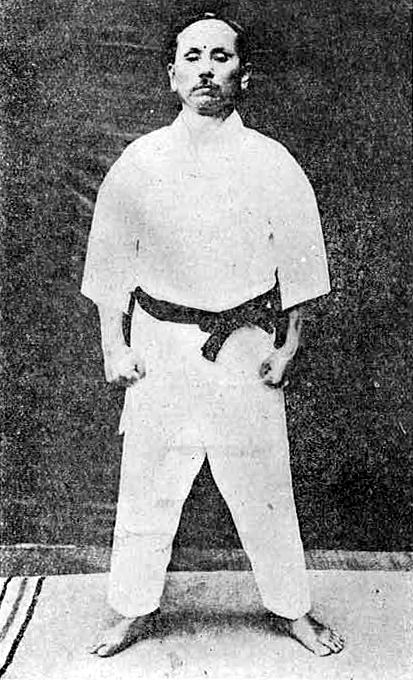
- Funakoshi in 1953: 船越義珍(Funakoshi Gichin), Public domain
- The ready position of a kata: Gichin Funakoshi, Public domain
Text written by Strongest Power.