Stay Safe: Awareness First
Notice, avoid, leave and call for help. The safest fight is the one that never happens. Simple everyday habits for awareness, calming tense moments, getting away and calling for help.
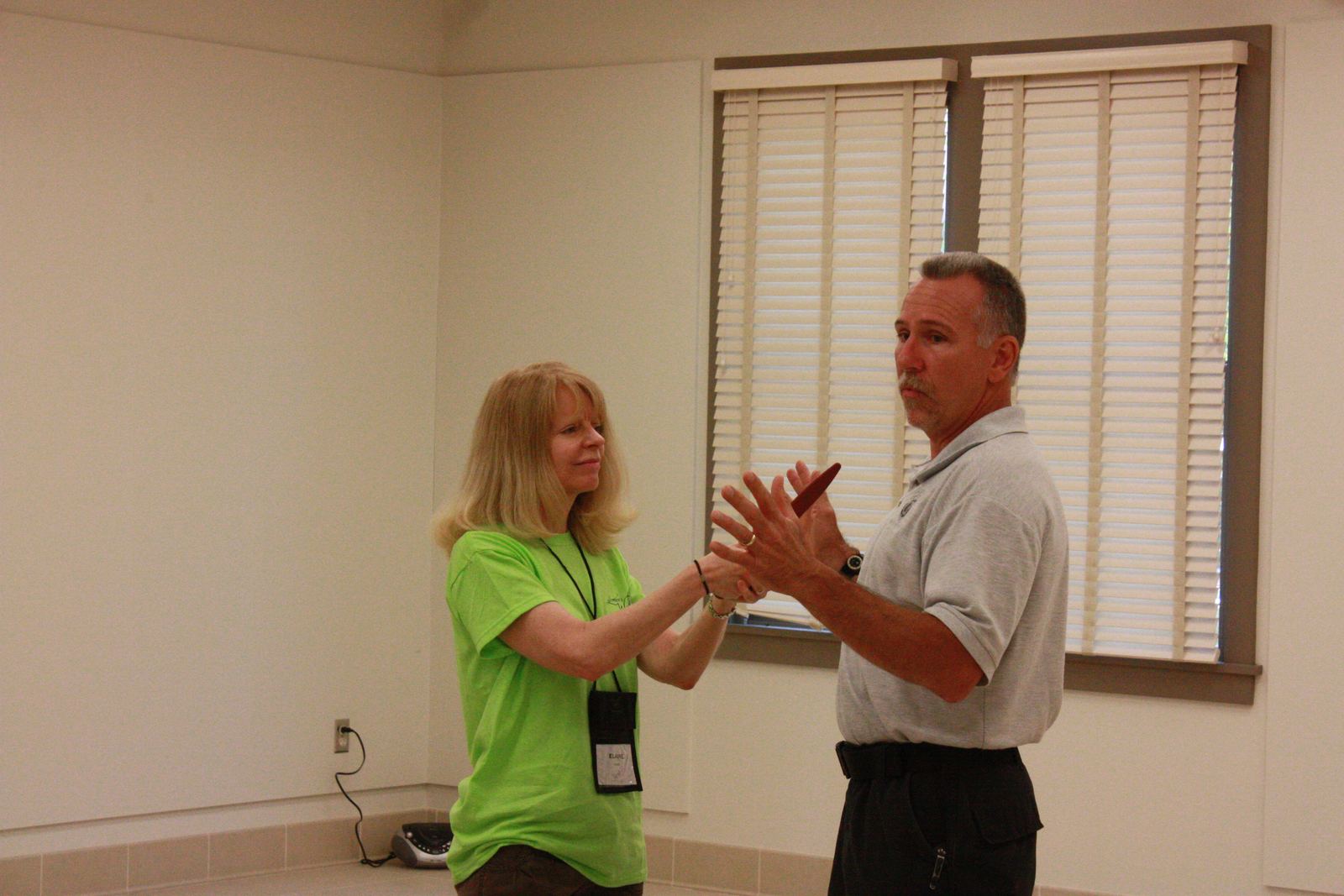
A community safety class: vastateparksstaff, CC BY 2.0
Awareness and planning
Every respected martial arts teacher says the same thing: the best way to win a fight is to avoid it completely. That starts with awareness. Keep your head up and your phone in your pocket when walking in unfamiliar places, notice who is around you and know where the exits are.
Trust your instincts. If a place, a person or a situation feels wrong, you do not need a reason to leave. Crossing the street, going into a shop or simply turning around is always allowed.
Small habits make a big difference. Let someone know where you are going and when you expect to arrive. Keep your phone charged, stick to well-lit routes, and travel with friends at night when you can. In a new city, ask hotel staff or locals which areas to avoid after dark.
Keep valuables out of sight. If someone demands your bag or phone, let them have it. Belongings can be replaced, and your safety matters far more.
Calming a tense moment
If someone becomes angry, staying calm is a powerful skill. Speak slowly and quietly, keep your hands open and visible, and give the person plenty of space. Avoid insults, pointing or staring contests. Saying sorry, even when you did nothing wrong, can end an argument before it grows.
Your goal is not to win the conversation but to get home safely. As soon as you can, walk away calmly toward people and light.
Getting away and getting help
If you feel in danger, move toward busy, well-lit places such as shops, restaurants or a group of people, and ask for help loudly and clearly. Call the emergency number for your country: 911 in the United States and Canada, 999 in the United Kingdom, and 112 across the European Union.
If you want to build confidence, look for a self-defence or martial arts class taught by a qualified, insured instructor with a good reputation. Good classes focus on awareness, confidence and escaping safely, and they train at a pace that keeps everyone safe.
Practise the habits
Awareness is a skill, and like any skill it improves with practice. On your next walk, try noting the exits of a shop or cafe, or checking which places along your route stay open late. Habits like these quickly become automatic.
Talk about safety plans with your family, including where to meet and who to call. Children can learn their address, a trusted adult's phone number and how to ask a shop worker or police officer for help.

- A community safety class: vastateparksstaff, CC BY 2.0
- Busy, well-lit places are safer: PattayaPatrol, CC BY-SA 4.0
Text written by Strongest Power.